

05 Dec
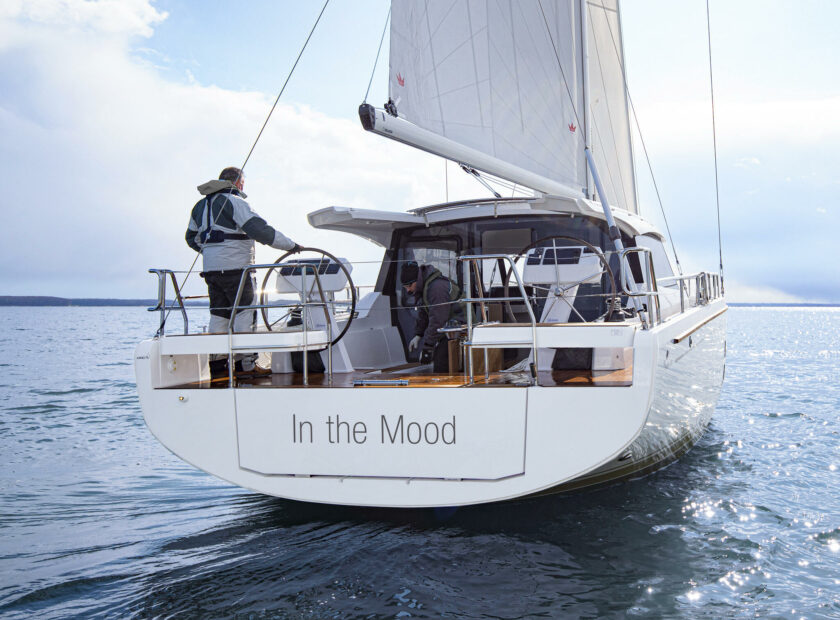
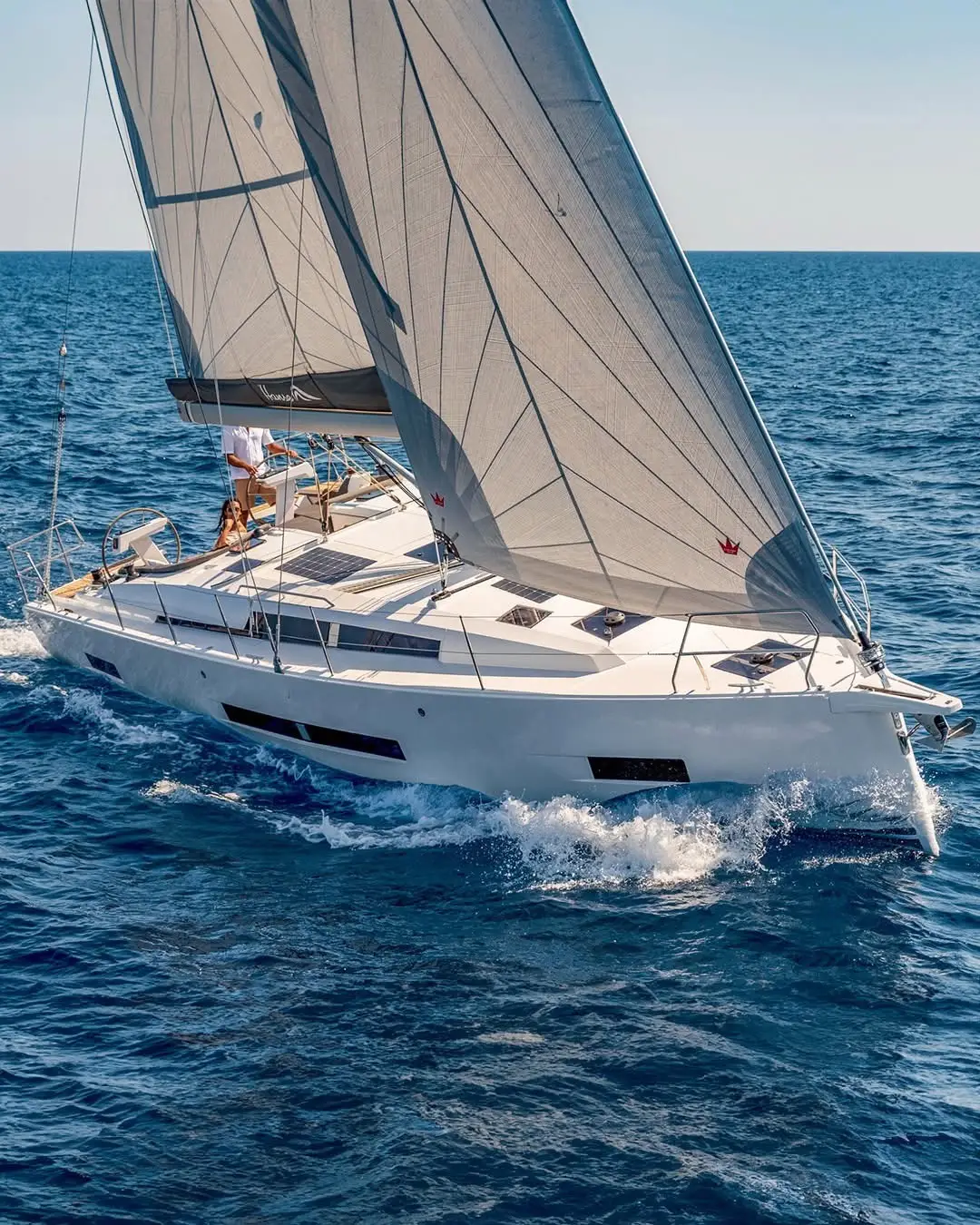
Hanse’s 410 is proving its versatility as an impressive performer on the racecourse and the ideal way to explore the Whitsundays single-handed.
The first hull of Hanse’s acclaimed mid-size family cruiser in Australia/NZ, Hanse 410 #95,
was handed over at the Royal Queensland Yacht Squadron at Manly back in July.
Over the past four months, Owner Johan has clocked up more than one thousand nautical miles on Makan angin, an apt Indonesian term for ‘Eat the Wind’.
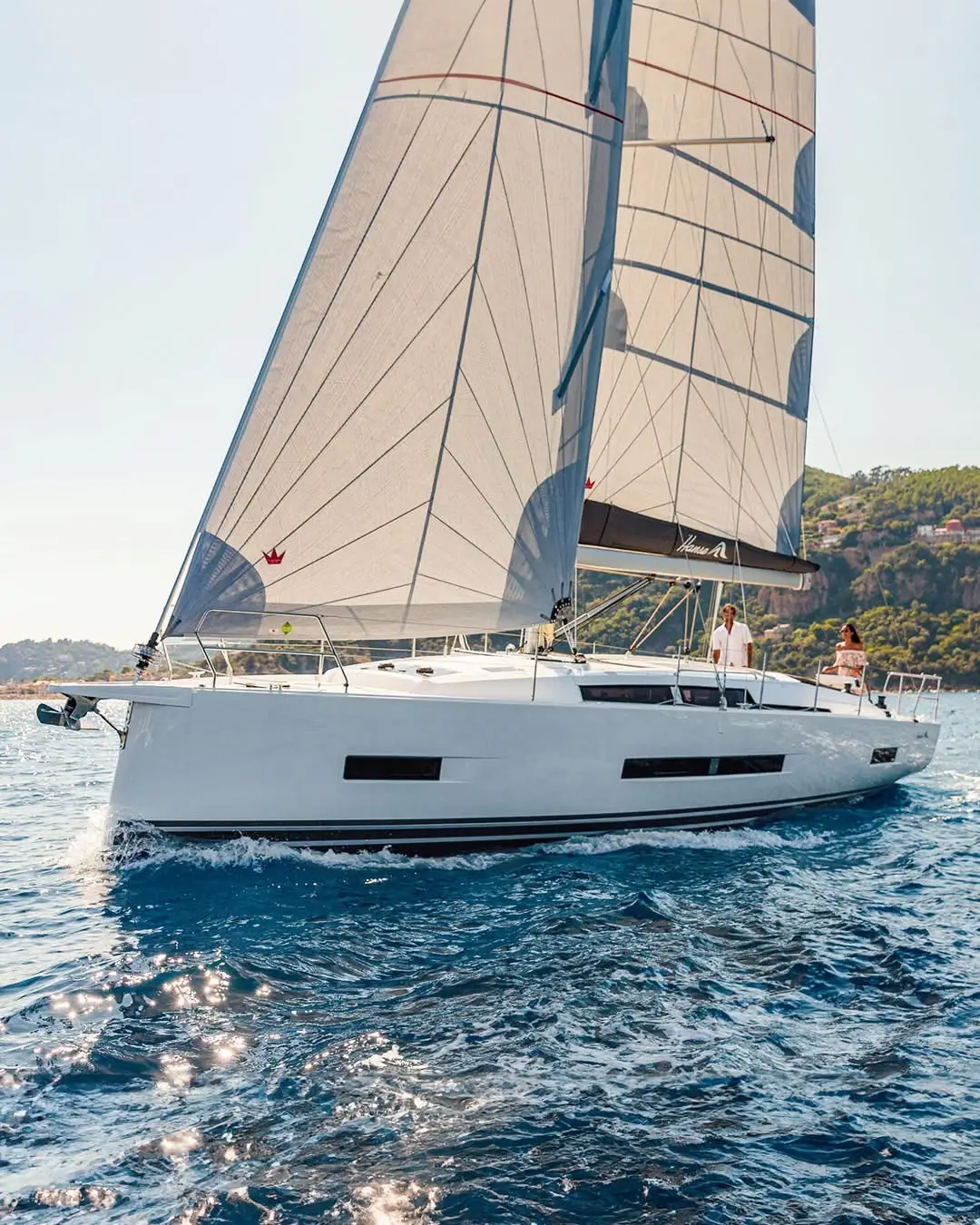
Makan Angin’s maiden sail was on Moreton Bay, and Johan reported back to Windshift that the 410 completely fulfilled its design parameters of a big volume (LOA 12.55 metres – 41ft 2 inches, beam 4.29m or 14ft 1 inch), cruiser that is highly enjoyable and rewarding to sail.
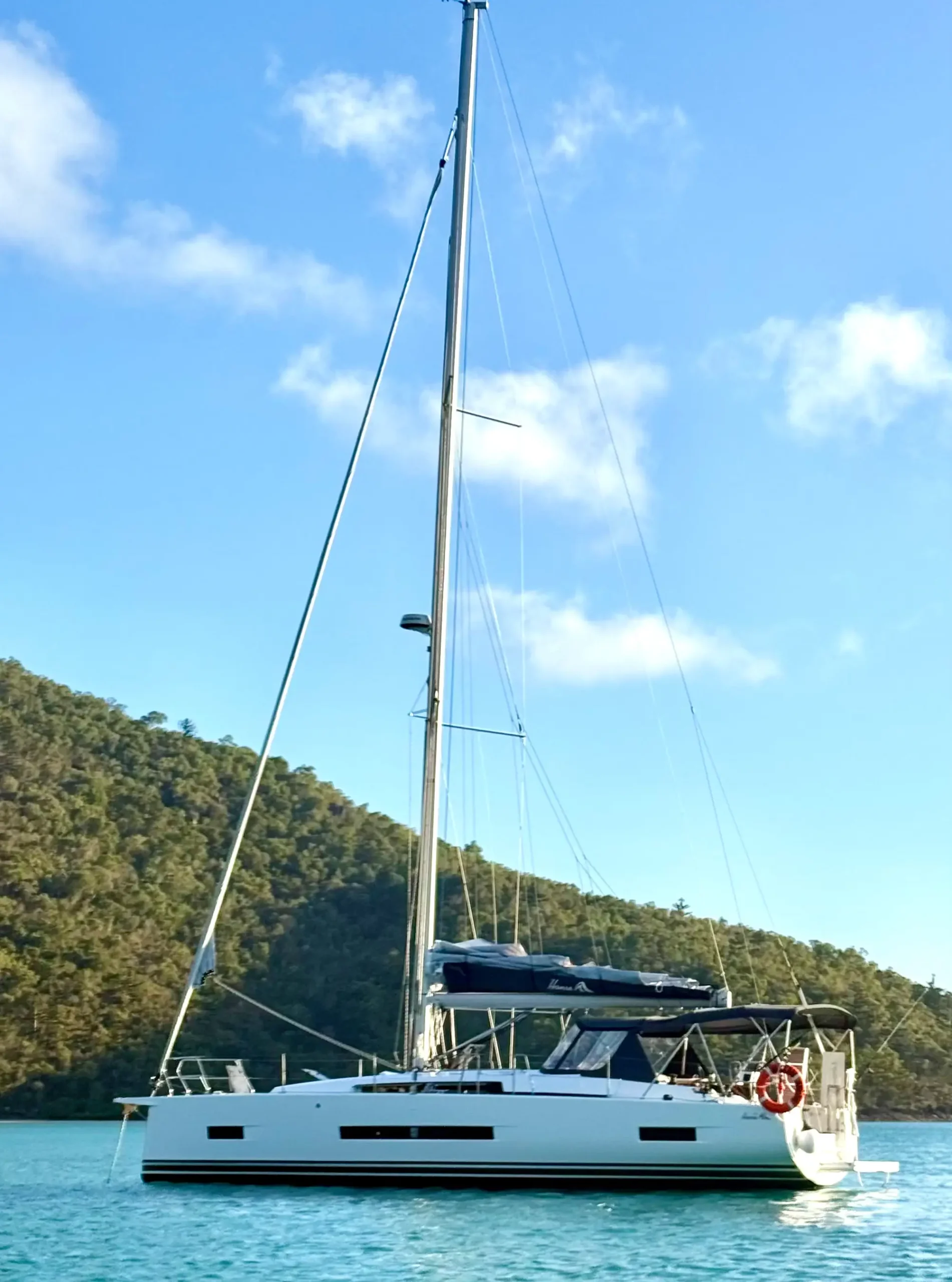
Lately, keen yacht spotters at Airlie Beach would have observed the Hanse 410 with its distinctive Signal White hull lining up in the Whitsunday Sailing Club’s popular midweek races.
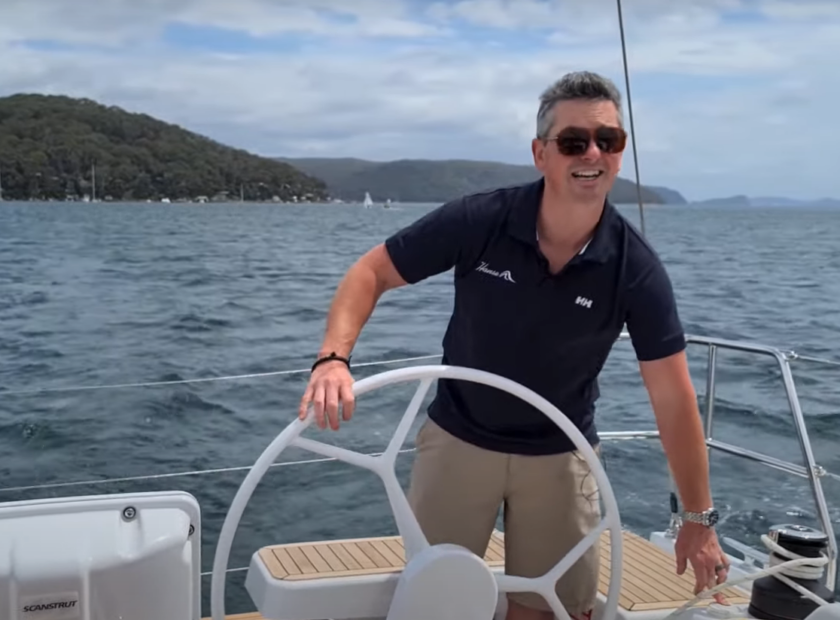
“I’ve been doing a bit of twilight racing on a Wednesday afternoon, and it performs pretty well, just with the self-tacking jib,” Johan confirms. “I have a new 110 per cent overlapping genoa, which I haven’t fitted yet, which will deliver a bit more spirited sailing,” he adds with enthusiasm.
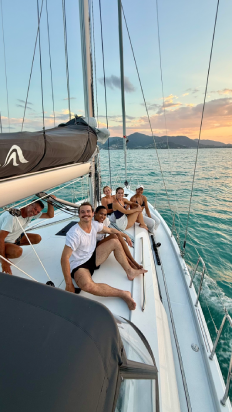
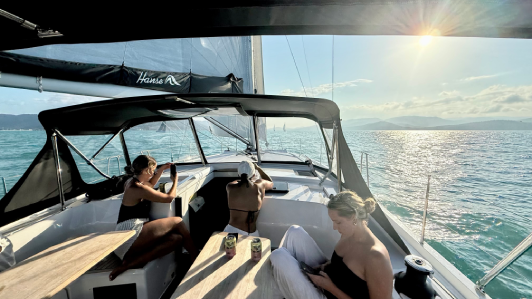
Reviewers such as SAIL magazine in the U.S. have praised the 410’s easy handling characteristics and responsiveness.
Heading upwind, we made 6 knots at an apparent wind angle (AWA) of 38 degrees in about 12 knots of true wind; coming out of a tack—which of course is dead easy with the self-tacking jib—she was a little slow getting back up to speed, but the wind had also dropped a bit. On the opposite tack we saw 6-6.5 knots of speed at 35 AWA in about 15 true. Adding some vang produced a quick response of an extra half a knot of boat speed.
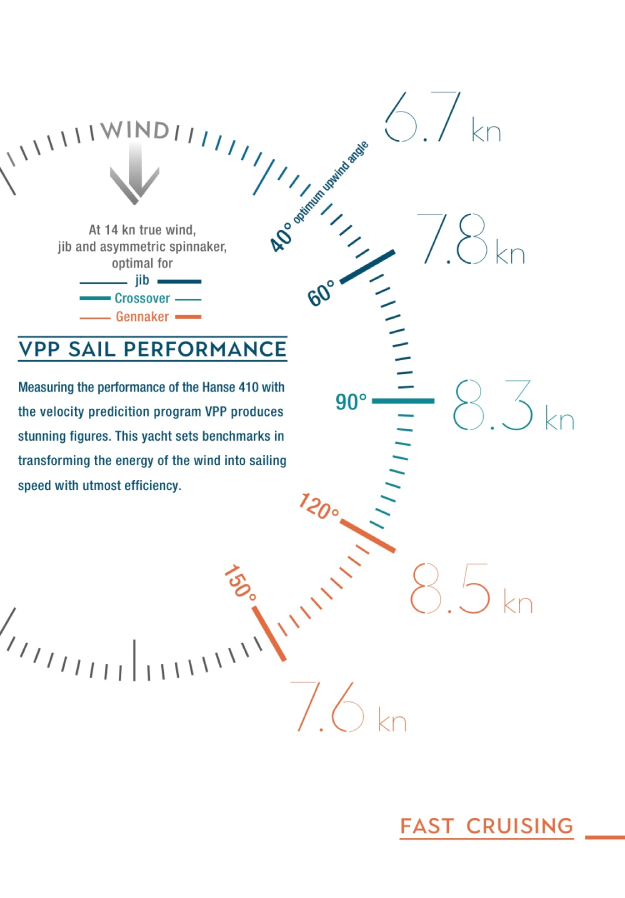
That’s a bit down on the factory-supplied Velocity Prediction Program that estimates 6.7 knots at 40 degrees in 14 knots of true wind. Changing to the bigger genoa and possibly an outboard sheet will see Makan angin achieve 8.5 knots on what Johan believes is the 410’s best point-of-sail.
“It’s probably happiest on a beam reach,“ Johan reveals. “We also tend to pull away from a few boats downwind because of the big main,” he continues.
“It’s really easy and simple to sail,” Johan says of his Hanse. “I’ve been taking a lot of newbies out, and since it’s well set up for single-handed sailing, it’s not stressful when I don’t have experienced people onboard,” he explains.
Johan is also pleased with the 410’s cruising amenities, well tested on the delivery from Brisbane, and then on two five-day solo trips around the Whitsundays, including Turtle Bay and Cid Harbour.
“The first was northerlies, so I went into Turtle Bay on the southern side of Whitsunday Island,” he recounts. “It was quite nice there,” he remarks.
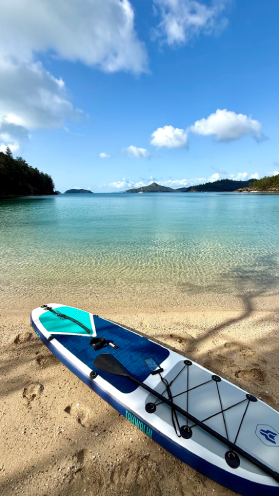
Turtle Bay is rated one of the best anchorages in the archipelago, snugly protected from northerly winds and home to large numbers of turtles, along with manta rays and good snorkelling off the five white sand beaches within the Bay.
“The last trip was Cid Harbour and then around to Gulnare Inlet chasing mud crabs, but sadly they proved elusive,” Johan says ruefully. Gulnare Inlet is described as a deep and narrow harbour cutting into the island, with mountains lining both sides of the inlet. Hamilton Island, with its full marina facilities, is not far away to the South.
The Hanse 410 offers up to 18 accommodation layout options including: a heads in the forward Owners cabin (or a dressing table and large wardrobe); either one or two aft double cabins, the latter of which turns the port quarter to become large stowage locker accessed from a door aft of the galley as well as on deck; a starboard saloon settee that can be shortened to accommodate either an aft-facing chart table or an out-board facing stowage locker beneath a standing chart table.
See the official Hanse 410 video here:
The 410’s generous proportions, including a beam of 4.29 metres or 14 feet 1 inch, translate into spacious below-deck accommodations.
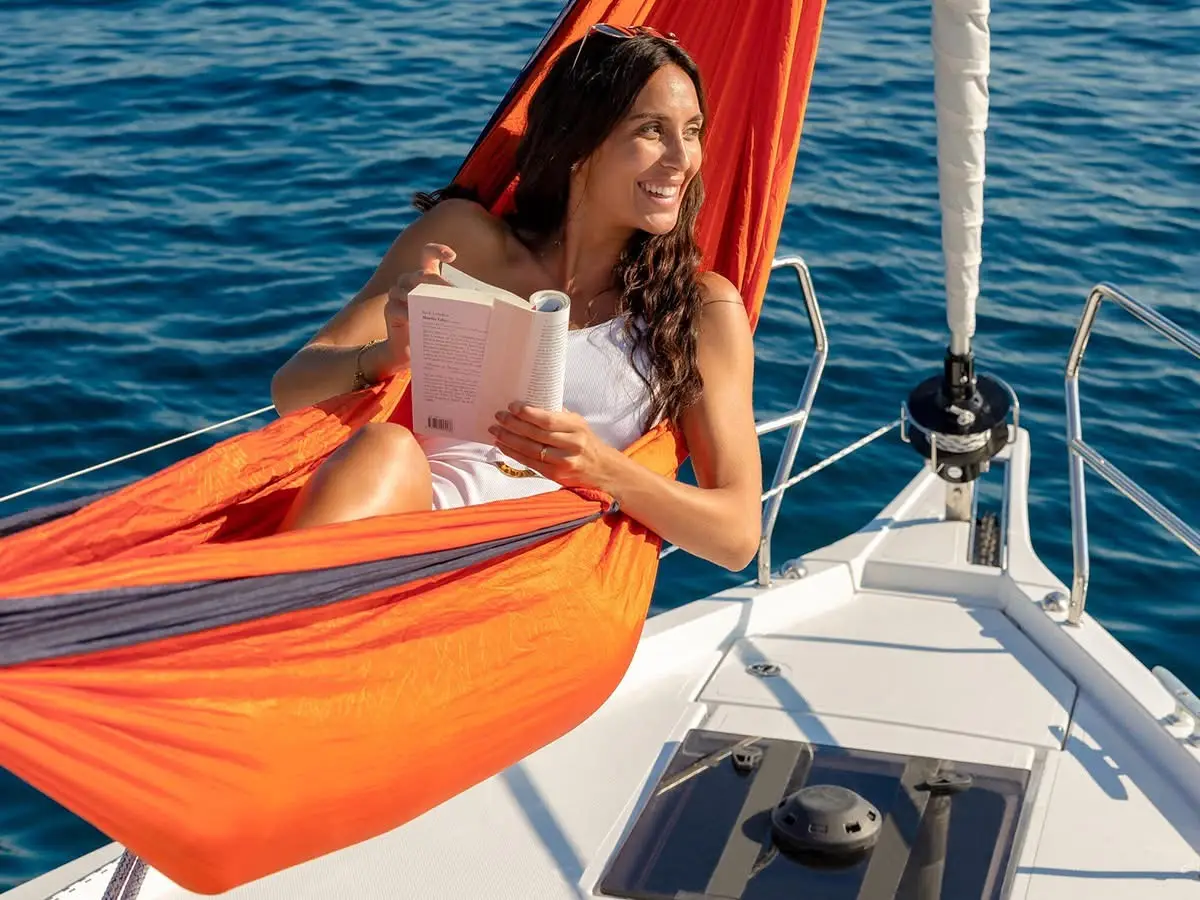
The full bow shape also means more space in the owner’s cabin and that, combined with an abundance of hatches – a total of 10 – the most opening deck hatches in its class, including five in the owner’s cabin forward, one in each aft cabin, and one over the galley and in the head, ensures excellent air flow.
“On hot nights at anchor with the hatches open, you get a lovely breeze circulating through,” Johan confirms. “The aft guest cabin is also comfortable with lots of headroom.”
At the same time, the full bow also helps to make the boat better balanced than finer-bowed predecessors and combined with a low-centre-of-gravity keel, a large single rudder, and generous rig, means the 410 can offer good performance under sail in most conditions.
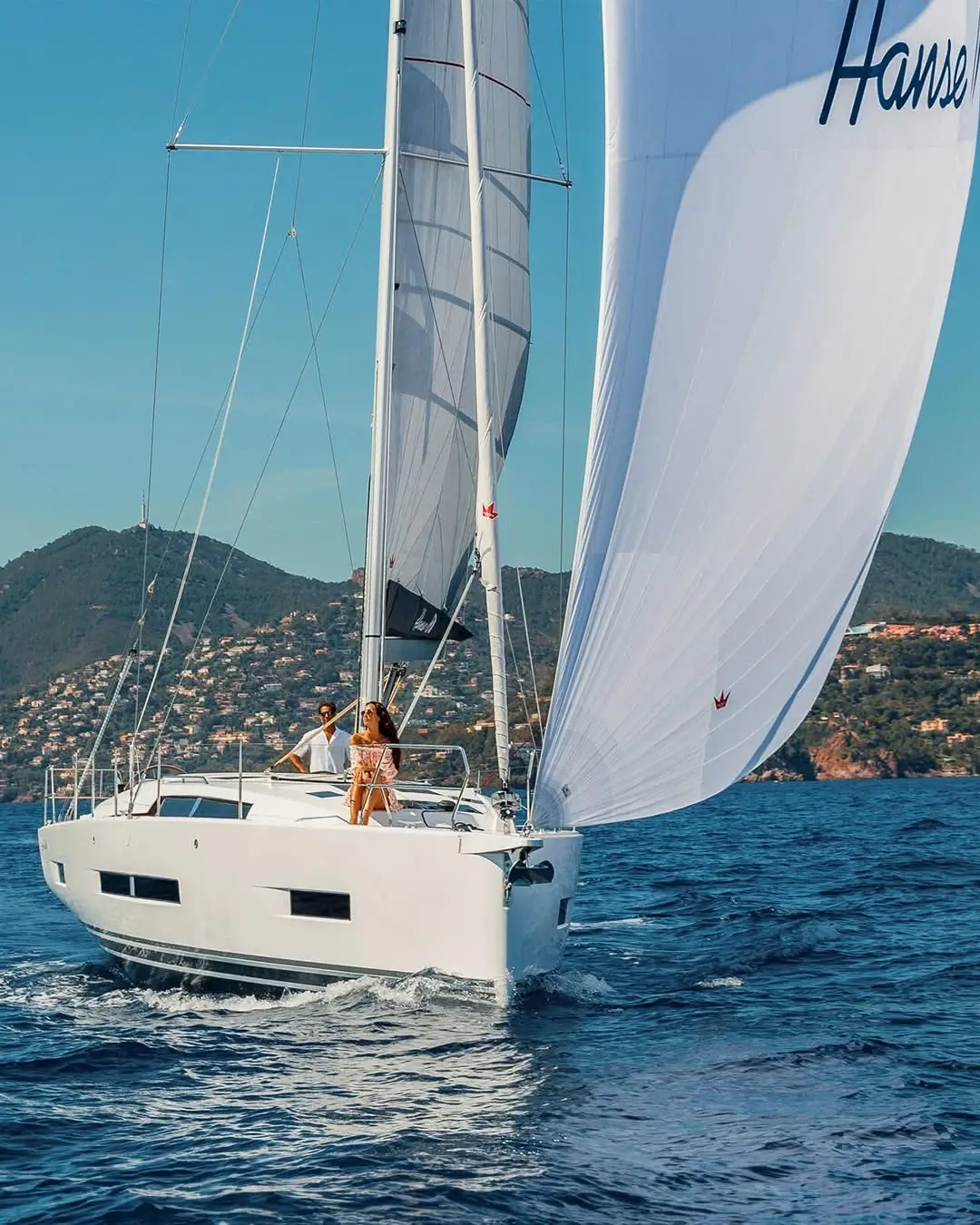
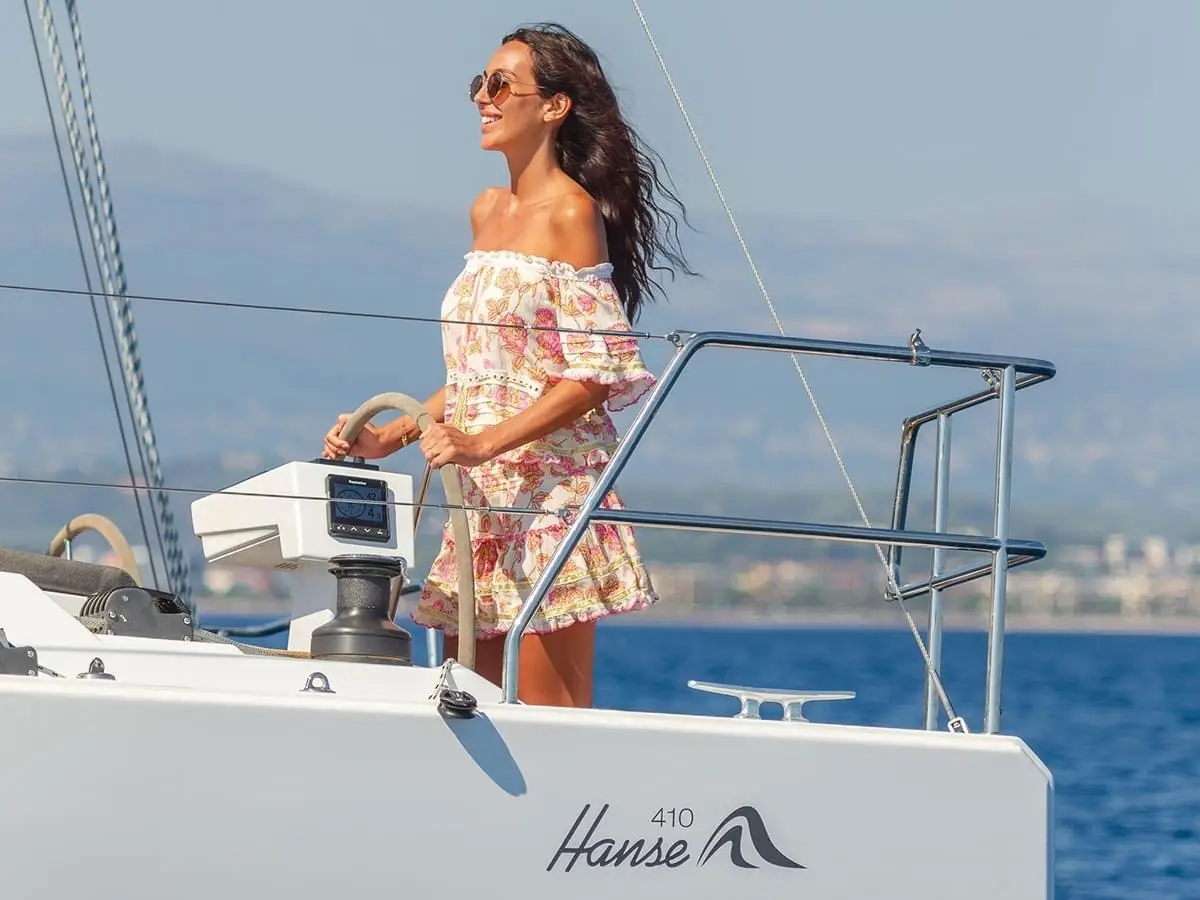
Johan’s satisfied he made the right decision for an optional bow thruster. “For single-handed trips, leaving and docking on my own. It just gives you that level of confidence, though I tend to try to do it without the thruster,” he confides.
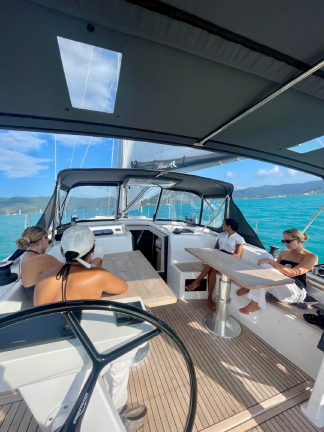
As the cockpit is where you spend the most time on any boat, Johan has ensured this large space on the 410 is able to be enjoyed in most weather conditions with custom additions.
The dodger is set-up really well with the front section all clears for great vision forward and around the sides, plus you are protected from the sun and rain,” he says.
“Overall, the boat has exceeded my expectations,” he acknowledges.
The Whitsunday Archipelago contains 74 stunning tropical islands surrounded by the turquoise waters of the Coral Sea. They range from Whitsunday Island with 280 square kilometres of lush, forested mountains and famous white sandy beaches, to small sand coral cays.
Johan’s Hanse 410 offers him and his guests a unique way to explore the island chain’s natural wonders thanks to a combination of class-leading space above and below decks, pleasing performance and premium appointments.
A Hanse 410 is available at the factory right now and could be delivered by next February to Australia or New Zealand for you to make the most of late summer cruising.
More information at sales@windcraftyachts.com